As an Amazon Associate, we earn from qualifying purchases. Some links on this site are affiliate links at no extra cost to you. Our recommendations are based on thorough research and editorial judgment.


How To Get Certified For Commercial RC Operations?

To obtain commercial RC certification, we’ll need to meet key FAA Part 107 requirements, including a minimum age of 16, English proficiency, and physical fitness standards. The process involves creating an IACRA profile, completing a 60-question knowledge test with a minimum 70% score, and submitting Form 8710-13. Registration through the DroneZone portal costs $5 for aircraft between 0.55-55 pounds, requiring triennial renewal. Our extensive guide provides detailed insights into certification maintenance and operational expansion.
Key Takeaways
- Must be at least 16 years old and demonstrate English language proficiency before pursuing certification.
- Pass the FAA knowledge test with a minimum score of 70% out of 60 questions.
- Create an IACRA profile and submit Form 8710-13 for Remote Pilot Certificate application.
- Register drones between 0.55 and 55 pounds through FAA DroneZone portal for $5 per aircraft.
- Complete mandatory biennial recurrent training to maintain certification and operational authority.
Understanding Commercial RC Certification Requirements
What distinguishes commercial drone operations from recreational flying lies in the stringent regulatory framework established by the Federal Aviation Administration (FAA). To meet commercial eligibility criteria, prospective pilots must be at least 16 years old, demonstrate English language proficiency, and maintain suitable physical and mental conditions for safe drone operation.
The certification process mandates obtaining a Remote Pilot Certificate, which requires creating an IACRA profile, completing Form 8710-13, and passing a Transportation Security Administration background check. We’ve observed that adherence to pilot safety guidelines encompasses thorough knowledge of airspace regulations, weather impacts, and emergency procedures, while the certification guarantees operators understand critical operational protocols and maintain compliance with evolving FAA standards, particularly in sectors such as agriculture, real estate, and infrastructure inspection. Additionally, cut-resistant gloves are essential for ensuring safety in various operational environments, similar to the protective measures required in commercial drone operations.
Essential Steps to Obtain Your Remote Pilot License

Obtaining a Remote Pilot License requires traversing a systematic certification process established by the Federal Aviation Administration (FAA), encompassing multiple critical phases and documentation requirements.
To secure certification benefits, candidates must first meet fundamental prerequisites, including a minimum age of 16, English language proficiency, and demonstrated physical/mental fitness. The process advances through completion of the 60-question FAA knowledge test at an approved testing center, requiring a minimum 70% passing score, followed by electronic application submission via the IACRA system. Additionally, understanding KV rating is essential for those looking to operate high-performance drones commercially, as it greatly influences flight dynamics.
Among the remote pilot advantages, successful certification enables nationwide commercial operations across diverse sectors, including real estate, agriculture, and construction, while facilitating potential airspace waivers for advanced operations. Certificate maintenance demands biennial recurrent training, ensuring sustained operational competency and regulatory compliance throughout one’s professional trajectory.
Recommended Products

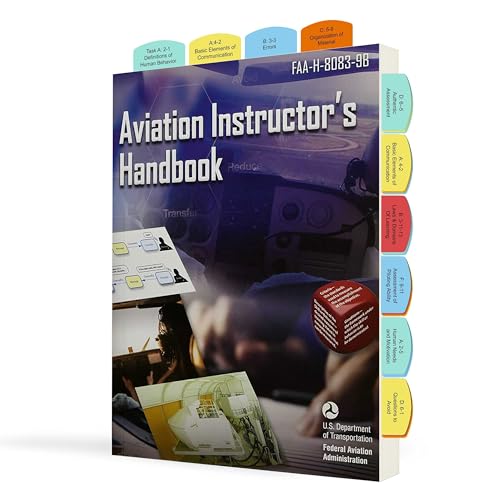
PRE-TABBED FOR FAST FOI REFERENCE: Professionally organized with pre-installed tabs to help instructors quickly locate critical Fundamentals of Instruction (FOI) topics. Eliminates time spent searching through pages and allows instructors to focus on effective teaching and student development.
Key Study Materials and Resources

Successful preparation for the FAA Remote Pilot License requires strategically leveraging an extensive array of study materials and resources, which collectively enable candidates to master the thorough knowledge requirements.
The primary study materials encompass official FAA documentation, including the Remote Pilot Study Guide, Airman Certification Standards, and Advisory Circular AC 107-2, which provide authoritative content across all examination domains. Among the essential resource types, we’ve identified commercial online preparation courses offering detailed video lectures, practice exams, and instructor support, while free online study guides supplement learning with additional practice questions and regulatory updates. For ideal examination readiness, we recommend utilizing a combination of FAA materials, third-party courses, and supplementary tools, including calculators and reference materials covering regulations, airspace requirements, weather effects, and emergency procedures. Additionally, incorporating materials on vibration control can enhance understanding of technical aspects relevant to drone operations.
Recommended Products

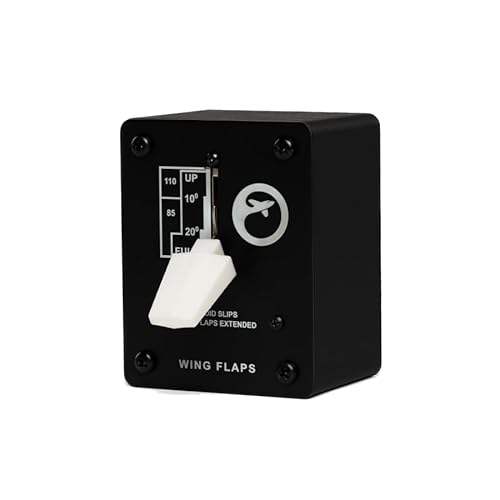
The Flaps Panel lets you control the degree of your flap extension with a four-position switch

Navigating the FAA Registration Process

With our examination preparation framework established, we’ll now address the systematic process of FAA drone registration, which represents a fundamental compliance requirement for commercial remote pilots.
The FAA’s drone registration protocols mandate that operators of unmanned aircraft systems weighing between 0.55 and 55 pounds must complete registration through the DroneZone portal, where we’ll establish an account using verified credentials and organizational details. Our compliance requirements encompass providing thorough documentation, including drone specifications, operator information, and a $5 registration fee per aircraft, while ensuring all registration certificates remain readily accessible during operations.
Commercial operators must register each drone individually under Part 107 guidelines, maintaining current registrations through triennial renewals and displaying assigned identification numbers prominently on their aircraft before conducting any commercial operations. Additionally, having a well-maintained AIO flight controller can significantly enhance the overall performance and stability of your drone during commercial flights.
Recommended Products

·8K Photo Excellence:The drone with camera Capture stunning, crystal-clear 8K photos and ultra-smooth 4K/60fps HDR video. Unleash your creativity and document every adventure in breathtaking detail.

Experience the Thrill of Flying - Enjoy total immersion and intuitive control with DJI Avata. When you combine Avata with the goggles and motion controller, flight becomes accessible to all.

No Registration Needed - Under 249 g, FAA Registration, and Remote ID are not required if you fly for recreational purposes.
Preparing for the Part 107 Knowledge Test

Professional mastery of the Part 107 Knowledge Test demands a thorough understanding of its multi-faceted examination structure, which encompasses 60 multiple-choice questions spanning critical domains such as airspace classifications, weather interpretation, and unmanned aircraft regulations.
To mitigate test anxiety, we’ll systematically review FAA-approved study materials, including sectional charts, METAR reports, and radio communication protocols, while implementing proven exam strategies through structured practice assessments. Our preparation methodology necessitates extensive analysis of maximum altitude restrictions, building proximity requirements, and emergency procedure protocols, ensuring operational competency across all testing parameters.
For peak performance, we’ll utilize FAA’s online resources and study guides, maintaining focus on weather effects, crew resource management, and night operations, while systematically documenting our progress through each knowledge domain. Additionally, understanding airspace classifications is crucial for navigating the complexities of drone operations safely and efficiently.
Recommended Products


Common Challenges and Solutions
Regulatory complexity stands as the foremost challenge in commercial drone operations, where operators must navigate an intricate web of federal, state, and local requirements. We’ve observed that compliance demands extensive documentation of flight plans, safety protocols, and pilot qualifications, while simultaneously requiring adaptation to continually evolving regulations. To address these regulatory challenges, we recommend implementing automated compliance tools, including geofencing systems and airspace data platforms, which greatly enhance operational efficiency. Additionally, establishing thorough internal policies for drone registration and operator training proves essential for risk mitigation. Moreover, we suggest engaging aviation law specialists to interpret complex requirements, particularly when pursuing operational waivers beyond visual line of sight restrictions, as these experts can streamline the application process while ensuring adherence to FAA standards. Incorporating regular inspections of equipment can further improve compliance with safety regulations.
Maintaining Your Certification Status
Maintaining certification status for commercial drone operations demands a thorough approach to ongoing compliance through multiple interconnected requirements and responsibilities.
We must systematically manage the recertification process by completing FAA-mandated recurrent training every 24 calendar months, maintaining detailed operational logs, and ensuring immediate accessibility to our remote pilot certificates. Regular compliance checks necessitate vigilant monitoring of regulatory updates through FAA channels, while proper documentation of training completion certificates, maintenance records, and incident reports supports our ongoing authorization to operate commercially. Our responsibilities extend to maintaining TSA security screening compliance and promptly reporting significant changes in medical or legal status that could affect certification eligibility, thereby ensuring uninterrupted operational authority under Part 107 regulations. Additionally, understanding the importance of safety features in remote control operations can enhance compliance and operational effectiveness.
Building Your Professional Portfolio
When establishing credibility in the commercial drone industry, a meticulously curated professional portfolio serves as our fundamental asset for showcasing operational expertise and market differentiation.
Through strategic portfolio organization, we’ll systematically document our Part 107 certifications, flight hours, specialized endorsements, and operational metrics, while incorporating extensive project documentation that demonstrates our technical proficiency across diverse industry applications. Our showcase projects should feature high-resolution imagery, detailed mission parameters, and quantifiable outcomes that validate our capabilities in areas such as aerial photography, mapping, and inspections. Additionally, we’ll maintain thorough records of insurance policies, safety protocols, and regulatory compliance documentation, supplemented by client testimonials and professional references that substantiate our operational excellence and industry reputation. Incorporating examples of high-quality footage from FPV camera gimbals can further illustrate our technical skills and enhance the portfolio’s impact.
Expanding Your Commercial Operations
Three critical market drivers are propelling our expansion into commercial drone operations: the sector’s projected growth to $35.23 billion by 2028, increasing demand across diverse industries, and emerging opportunities in specialized services.
To capitalize on this growth trajectory, we’re implementing a strategic approach to expanding service offerings through specialized capabilities in thermal imaging, LiDAR, and multispectral data collection, while scaling workforce through the recruitment and certification of additional pilots. As operations expand, we’re establishing thorough standard operating procedures and implementing drone management software to maintain regulatory compliance across multiple crews.
Our operational scaling framework prioritizes the systematic development of documentation protocols, fleet management systems, and recurring training programs, ensuring sustained quality delivery while pursuing high-value contracts in government, municipal, and enterprise sectors. Additionally, integrating advanced flight controllers will enhance our drone performance and operational reliability.
Frequently Asked Questions
What Happens if My Drone Crashes During a Commercial Operation?
Like dominoes falling, we’ll face drone accident liability and must follow crash reporting procedures. We’ll need to notify the FAA within 10 days, document damages, and our insurance may cover costs if applicable.
Can I Share My Remote Pilot Certificate With Other Drone Operators?
No, we can’t engage in pilot sharing – Remote Pilot Certificates are individually owned and non-transferable. Each operator must obtain their own certificate. Certificate ownership is strictly personal and sharing violates FAA regulations.
Are There Restrictions on Flying Drones Near Military Bases?
Yes – we’ve all got to be extremely careful with military airspace. Drone regulations strictly prohibit flying near military bases without special authorization. Let’s avoid these areas completely or risk serious federal penalties.
Do I Need Additional Insurance Coverage for Commercial Drone Operations?
Yes, we strongly recommend liability insurance for commercial drone operations. We’ll help you assess your risk level to determine which insurance types you need – from basic liability to hull and payload coverage.
Can Foreign Pilots Obtain FAA Remote Pilot Certification?
Like birds migrating across borders, we’re happy to share that foreign pilots can obtain FAA certification. They’ll need to pass the knowledge test, undergo TSA screening, and meet standard pilot requirements, regardless of nationality.


